
Emails Reveal Why O'Neill Burke Wouldn't Denounce Trump
Internal campaign emails show Eileen O'Neill Burke avoided criticizing Trump over fears it would cost her the Cook County state's attorney race.
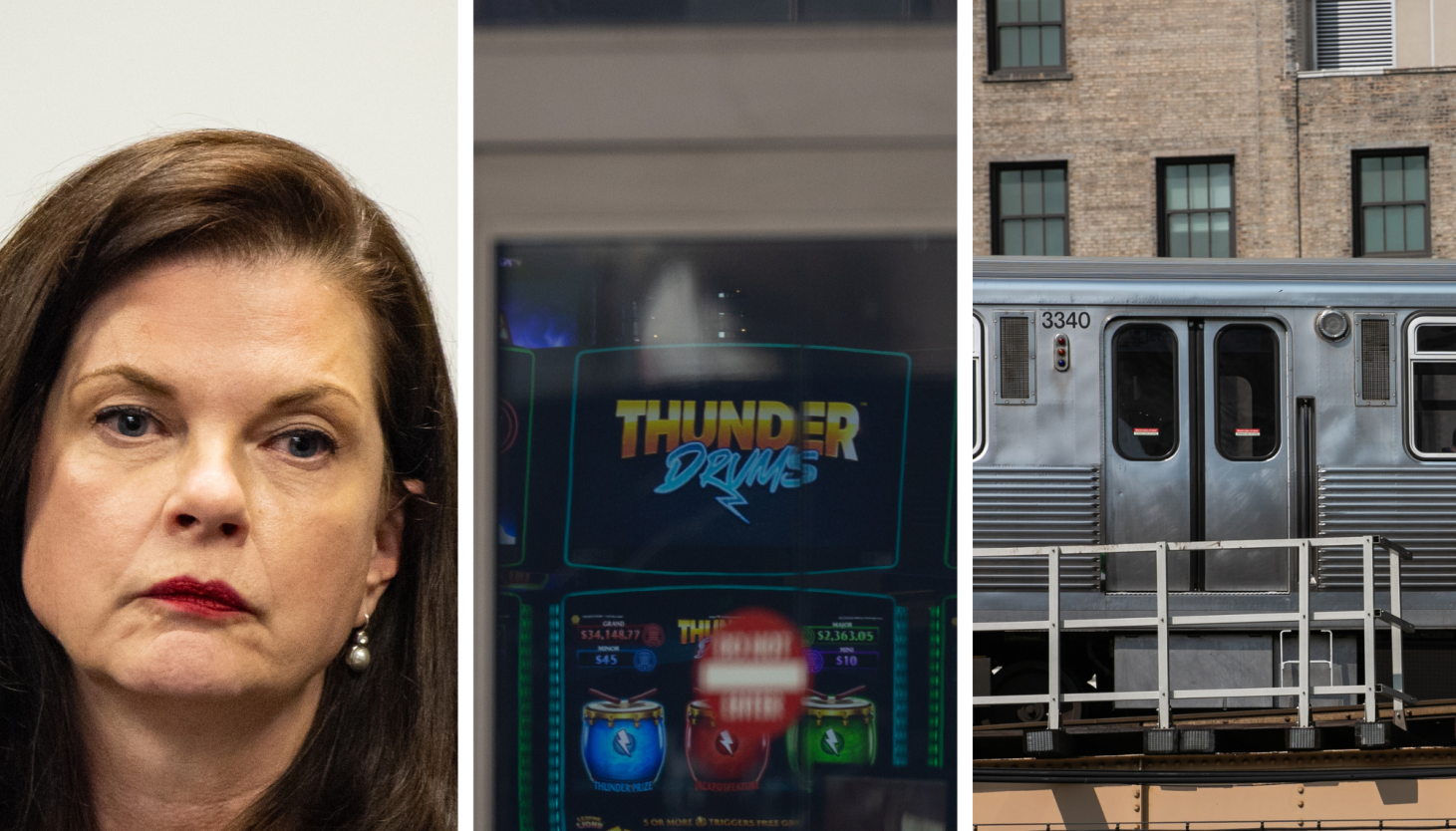
Emails obtained by the Cook County state’s attorney’s office show that Eileen O’Neill Burke declined to publicly denounce President Donald Trump last fall after her political advisers warned it could cost her the race.
The emails, first reported by the Chicago Sun-Times, reveal internal deliberations from O’Neill Burke’s 2024 campaign that her team weighed the political risk of directly criticizing Trump against the potential benefit of energizing Democratic voters in Cook County’s suburban collar.
The documents put O’Neill Burke in a difficult position now that she holds the state’s attorney’s office and faces pressure from progressive groups who say her silence on federal immigration enforcement actions in the Chicago area was disqualifying from the start.
O’Neill Burke has said the office won’t seek to prosecute cases that originate solely from federal immigration arrests without underlying state charges. That policy has drawn praise from immigrant rights organizations in Pilsen and Little Village. It’s also drawn sharp criticism from Republican lawmakers in Springfield who argue the county’s top prosecutor is obstructing federal law enforcement.
The timing of the email disclosure puts fresh pressure on her.
Cook County’s Democratic establishment spent much of early 2025 defending O’Neill Burke as an independent voice, but the emails complicate that framing by showing her campaign’s direct calculation on Trump criticism was rooted in electoral arithmetic, not principle.
A spokesperson for the state’s attorney’s office did not respond to a request for comment Monday.
The emails land as Gov. JB Pritzker is separately pushing a major restructuring of how Illinois regulates its gambling industry. Pritzker wants to overhaul the role of the Illinois Gaming Board, which currently oversees casinos, video poker terminals, and sports betting across the state. The governor’s proposal would shift oversight responsibilities and create a new regulatory framework that his office says is better suited to an industry that has grown dramatically since Illinois legalized sports betting in 2019.
Critics of Pritzker’s plan, including some members of the Illinois Gaming Board itself, say the restructuring is premature and risks creating gaps in enforcement at a time when the state is collecting record gambling tax revenue. The board oversees more than 40,000 licensed video gaming terminals statewide.
At the same time, a group of state lawmakers is working to keep the Chicago Bears in Illinois, reviving conversations about a stadium deal that’s been dormant for months. Legislation is circulating at the Capitol in Springfield that would provide public financing support for a Bears stadium on the lakefront or the Burnham Park corridor, though no bill has cleared committee.
The Bears have explored sites in Arlington Heights and along the South lakefront near the old Michael Reese Hospital property. Team officials haven’t committed publicly to any location, and the NFL’s own stadium development calendar adds pressure to finalize a deal before the 2027 season.
Bears fans in the South Side neighborhoods around Soldier Field haven’t forgotten what it felt like when the team floated a full departure from the city. Many don’t trust the public financing conversation.
“Nobody wants to be left holding the tab for a billionaire’s stadium,” said one Bridgeport resident who attended a community meeting on the lakefront development in March.
Separately, the Chicago Transit Authority is facing renewed scrutiny over its capital funding shortfall. The CTA’s five-year capital plan, as outlined on the CTA’s official capital improvement page, identifies billions in deferred maintenance on the Red, Blue, and Green lines. Federal transit funding under the current administration in Washington has been uncertain, and CTA leadership has offered no concrete timeline for several stalled station renovation projects, including the long-delayed reconstruction at the Wilson stop on the Red Line, which has already blown through two projected completion dates.
Riders on the North Side have grown openly frustrated. On the South Side, where rail infrastructure gets less attention and less money on a per-capita basis, the frustration is older and deeper.
The O’Neill Burke emails, the gambling overhaul, the Bears stadium fight, and the CTA funding crisis all point to the same structural reality in Cook County politics: decisions made in private, whether in campaign strategy sessions or in Springfield conference rooms, eventually surface and land on the people who ride the train to work every morning. O’Neill Burke’s office is scheduled to present its quarterly crime statistics to the Cook County Board on May 6, and those numbers will offer the clearest public measure yet of whether her first months in office have produced results on the ground.