
Chicago Council Demands Hearings on ShotSpotter Replacement
Three aldermen pushed a resolution demanding hearings into why Chicago heads into a second summer without a gunshot detection system despite $13.9M budgeted.
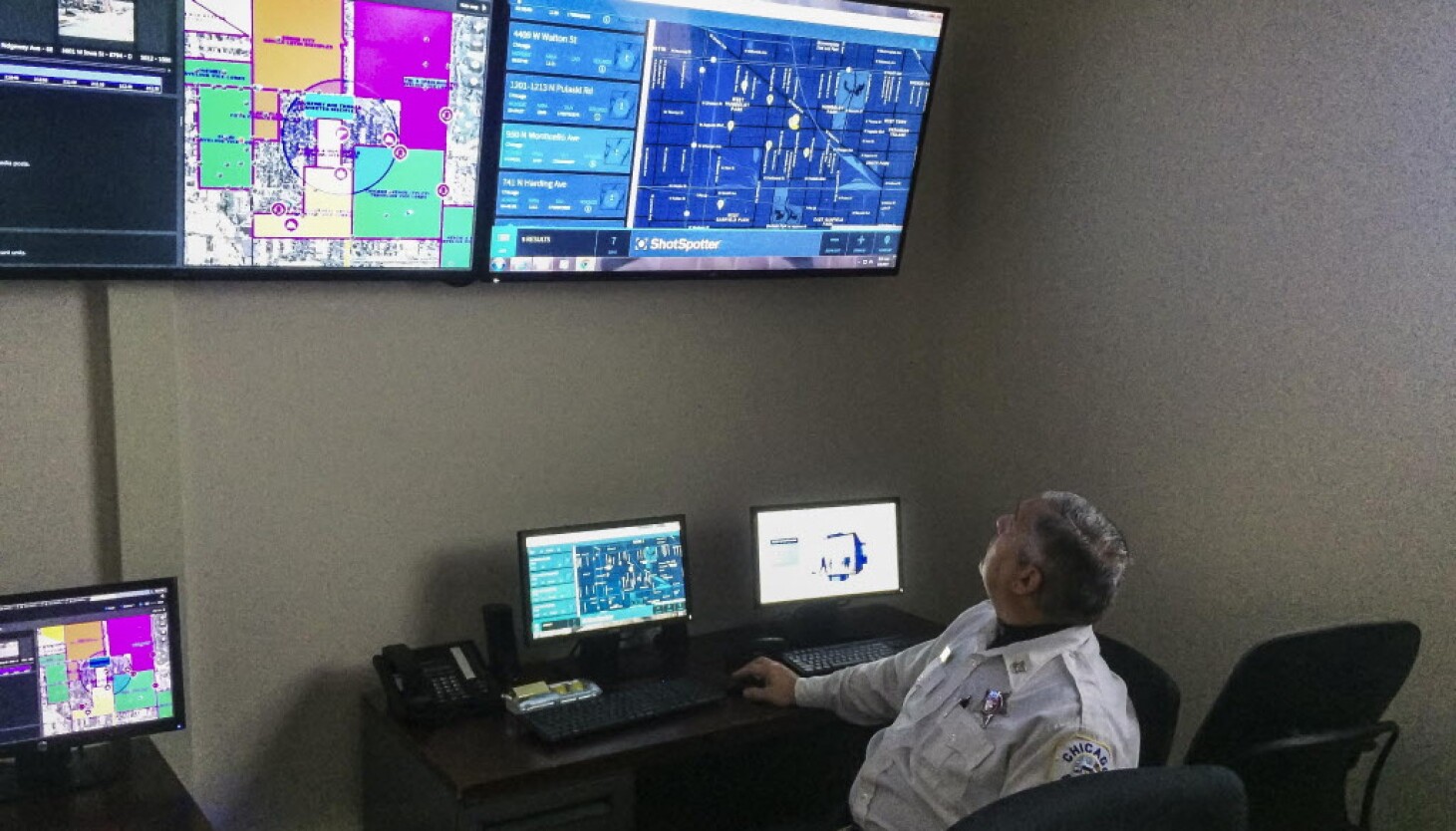
Three aldermen pushed a formal resolution through City Council on Wednesday demanding hearings into why Chicago is heading into its second consecutive summer without a gunshot detection system, with $13.9 million already budgeted and no replacement technology in place.
Public Safety Committee Chair Brian Hopkins (2nd Ward), Ald. Peter Chico (10th Ward) and Ald. Derrick Curtis (18th Ward) introduced the measure at the April 15 meeting, targeting what they called “delays and missed deadlines” in replacing ShotSpotter, the acoustic detection system Mayor Brandon Johnson pulled from city streets after taking office.
The resolution also calls for scrutiny of what its sponsors describe as “protracted delays in implementing a records management system to improve data collection, analysis and officer oversight, including an early intention system to identify at-risk behavior.”
Hopkins didn’t hide his frustration.
“The whole point of it is to dispatch police automatically when shots are fired,” Hopkins told the Chicago Sun-Times. “This administration is philosophically opposed to that. So even though they said they would replace ShotSpotter, their preference would be for this whole issue to just fade away and we’re not going to let that happen.”
The backstory here is knotty. Johnson denounced ShotSpotter as a “walkie-talkie on a stick” during his 2023 campaign, drawing on criticism from progressive supporters who viewed the technology as costly, ineffective and a driver of over-policing in the Black and Brown communities on the South and West Sides where gun violence is most concentrated. After taking office, he moved to drop the contract with SoundThinking, the company that owns ShotSpotter.
A defiant City Council responded by passing an ordinance authorizing Police Superintendent Larry Snelling to sign a new contract directly. Johnson declared that ordinance “illegal” and refused to act on it. He did, however, negotiate a short-term extension that kept ShotSpotter running through the August 2024 Democratic National Convention in Chicago, a notable concession that critics said undercut his own stated position on the technology’s value.
Johnson then launched a formal open competition to find a replacement system. Eight firms, including SoundThinking, submitted responses to the city’s request-for-information by the Sept. 20, 2024 deadline.
Nothing followed. No contract. No announcement. No system.
The two most recent city budgets set aside a combined $13.9 million for replacement gunshot detection technology. That money sits unspent while homicide numbers in neighborhoods like Englewood, Auburn Gresham and South Deering continue to track at rates that have long alarmed public health researchers. Chicago’s public health department has documented gun violence as a leading cause of premature death for residents under 45 on the South and West Sides.
Hopkins, a consistent ShotSpotter defender, argued Wednesday that the technology’s core function, automatically alerting and dispatching officers when shots are detected, saves lives by cutting response times in the critical moments after a shooting. He framed the administration’s inaction not as bureaucratic delay but as deliberate indifference rooted in ideology.
Chico, a former Chicago police officer, and Curtis both represent wards where gun violence statistics have historically run well above the city average. Their support for the resolution reflects a strain of frustration inside City Council that crosses ward lines. Several aldermen who represent South Side and West Side constituencies have grown increasingly impatient with what they see as the Johnson administration’s unwillingness to move on a direct public safety commitment it made as recently as 2024.
The Gun Violence Research Consortium at RAND has published mixed findings on acoustic detection systems, noting that their effectiveness varies significantly based on deployment density and the speed of follow-up response. Critics of ShotSpotter have long cited that research, as well as studies suggesting high rates of false alerts, to argue the technology consumes resources without improving outcomes.
Supporters counter that the debate over research is being used to justify inaction in communities that are actively experiencing shootings every week this spring.
The proposed hearing doesn’t compel the administration to adopt any specific technology. It would, however, force city officials to explain publicly why the procurement process that started in September 2024 has produced no result and what the timeline looks like before another summer arrives with the sensor grid still dark. Johnson’s office had not responded to requests for comment as of Wednesday evening.