
CTA Breaks Ground on Red Line Extension's First Station
Chicago's CTA broke ground on the $5.7 billion Red Line extension, pushing the city's busiest rail line south to 130th Street with four new stations.
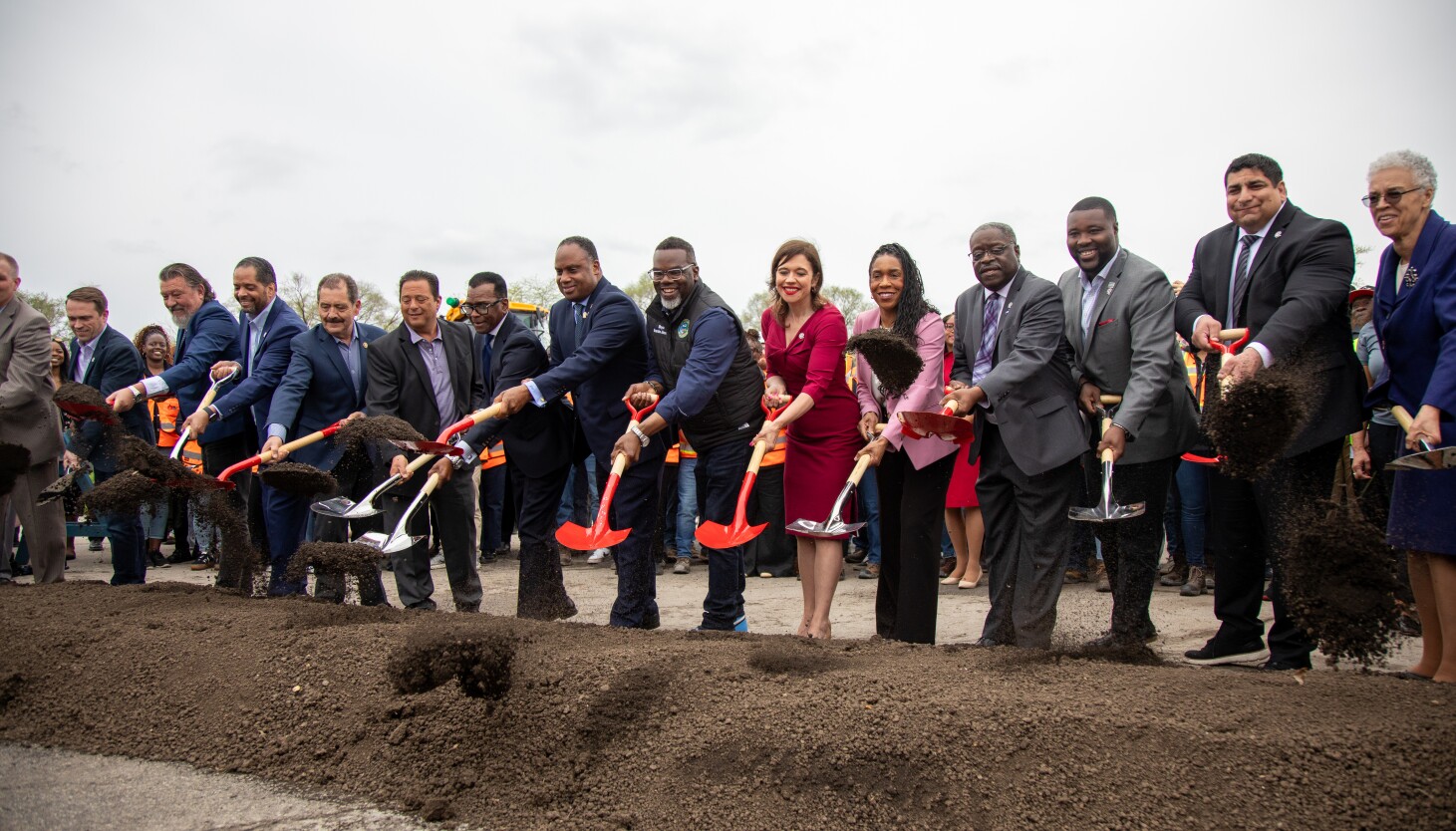
The Chicago Transit Authority broke ground Friday on the first station of the long-delayed Red Line extension, a $5.7 billion project that would push the city’s busiest rail line from 95th Street south to 130th Street, adding four new stations through the Far South Side.
The ceremony took place at 115th Street and Michigan Avenue, where one of those four stations will be built. Mayor Brandon Johnson attended alongside a group of elected officials, and former Chicago Bulls player Scottie Pippen appeared at the event as well. Johnson and the officials said the project corrects a long-standing injustice against Far South Side communities that have gone without rapid transit access for decades.
The federal money situation, though, isn’t settled.
The Trump administration’s Department of Transportation froze $2 billion in federal grants tied to the project last month, citing concerns about the CTA’s contracting practices. The CTA challenged the freeze in federal court, and a Chicago judge ordered the funds released. That ruling, reported by the Chicago Sun-Times, came roughly a month before Friday’s event.
The freeze had nearly halted preparatory construction work. CTA officials said the court victory cleared the path for Friday’s ceremony to go forward.
The extension has carried symbolic weight for years in communities like Roseland, Pullman, and Riverdale, neighborhoods that sit well south of the existing Red Line terminus at 95th Street. Residents in those areas have pushed for decades for a rail connection to the Loop, arguing that the absence of rapid transit has contributed to economic isolation and longer commutes. The Federal Transit Administration has previously identified the Far South Side corridor as one of the most transit-dependent in the region.
At $5.7 billion, the Red Line extension ranks among the largest public infrastructure investments in Chicago’s history. The project is backed by a mix of federal and local funds, and the CTA’s capital plan outlines construction phased over several years. Four stations are planned along the extended route between 95th and 130th streets.
The standoff with the federal government showed how exposed the project remains to political pressure from Washington. The DOT’s decision to freeze grant money mid-construction was a significant escalation that forced the CTA into litigation before a single shovel hit the ground at the 115th Street site. A federal judge’s intervention unlocked the funds, but the administration has not publicly committed to releasing the remaining balance of its share under stable terms.
Johnson’s team framed Friday’s event as a milestone for transit equity on the South Side, and the mayor has tied the extension to his broader argument that city government can deliver for communities that have historically been overlooked. His attendance, alongside a roster of elected officials, signaled that the administration wants the project visible.
Pippen’s presence drew attention but wasn’t out of character for a city that has long mixed sports celebrity with civic ceremony. He grew up outside Chicago and spent the better part of his career at the United Center on the West Side. His connection to the Far South Side wasn’t detailed at the event.
The 115th Street station site sits in a stretch of the South Side where Michigan Avenue runs through blocks that have seen disinvestment for years. Getting construction to this point required the CTA to win a court fight, manage federal scrutiny of its contracting, and hold together a coalition of community supporters who had watched the project get promised and delayed across multiple administrations.
Whether the full extension gets built on schedule will depend in part on how the Trump administration handles the remaining federal grant obligations. The DOT’s stated reason for the freeze, a review of CTA contracting practices, has not produced any formal findings that the agency has disclosed publicly. The CTA has said its practices comply with federal requirements.
Construction timelines and cost projections for projects of this scale routinely shift, and Chicago’s history with major transit builds includes delays measured in years. The CTA has not released a revised completion schedule tied to the litigation period. Officials said Friday that construction will continue at the 115th Street site while work on the remaining three stations proceeds through the planning and permitting process.