
Loyola University Demolishes Century-Old Rogers Park Flatiron Building Despite Community Opposition
Loyola University Chicago began tearing down a distinctive 100-year-old flatiron building in Rogers Park last week, moving forward with demolition despite years of community efforts to preserve the triangle-shaped structure.
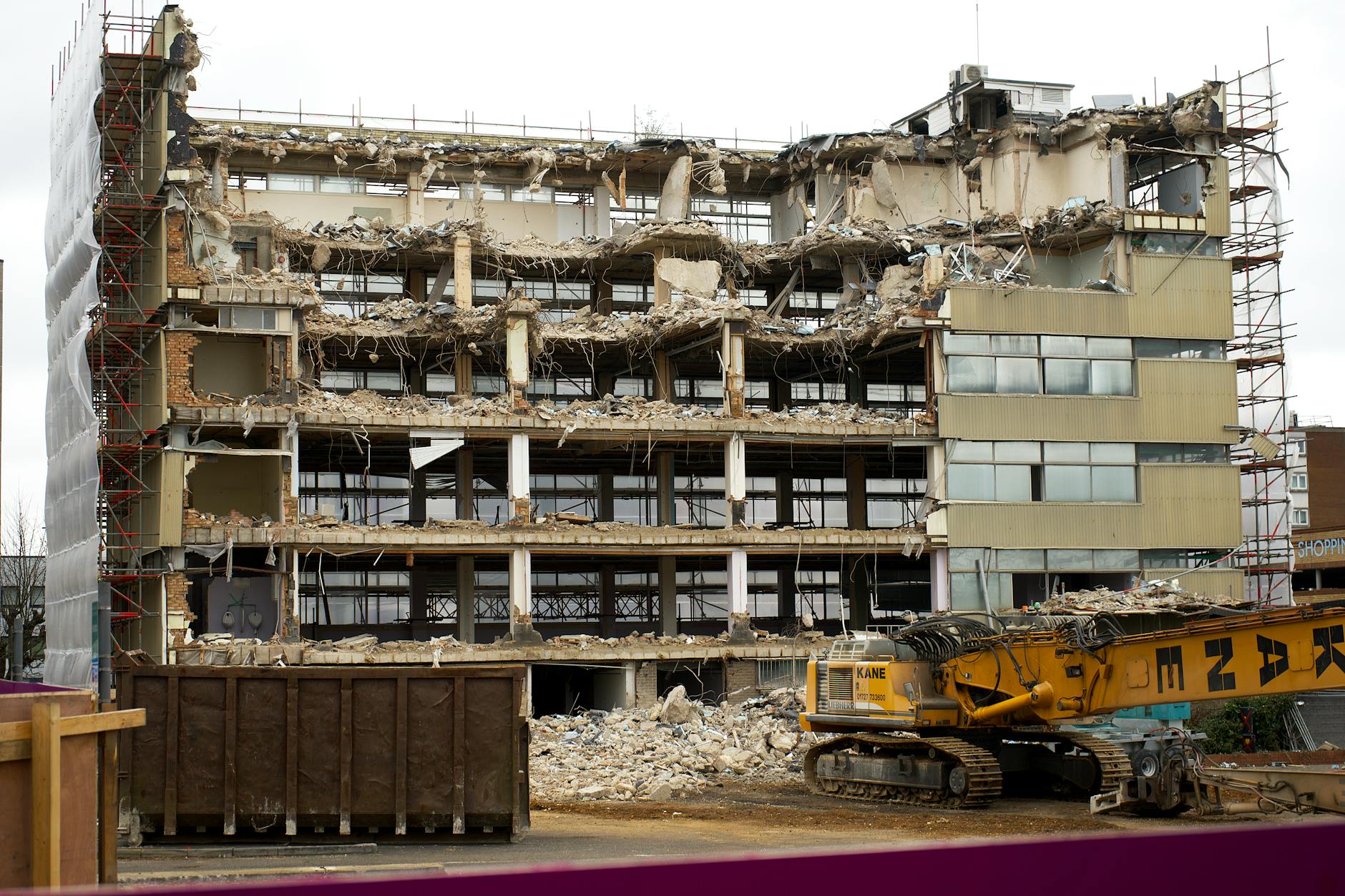
Loyola University Chicago began tearing down a distinctive 100-year-old flatiron building in Rogers Park last week, moving forward with demolition despite years of community efforts to preserve the triangle-shaped structure.
The university started demolishing the 30-unit apartment building at 1224 W. Loyola Ave., which architect R. Bernard Kurzon constructed in 1926, according to city records. The building sits next to the Loyola Red Line stop and once housed local businesses including Archie’s Cafe, Roman Susan Gallery and Edge Art.
Loyola purchased the property in 2024 for $3 million, according to the student newspaper Loyola Phoenix. The city issued a demolition permit on Jan. 5, according to city records.
A university spokesperson declined to confirm the purchase price but referenced a Feb. 11 newsletter statement by Associate Vice President Jennifer Clark. Clark acknowledged the demolition permit “has raised questions” about the site’s future and wrote that the location is part of a future Chicago Transit Authority project, “meaning Loyola will not be the sole decision-maker regarding its long-term use.”
“But, we are committed to stewarding the site responsibly and thoughtfully,” Clark stated in the newsletter.
The demolition will take four to six weeks depending on site conditions and weather, according to the university. Once complete, Loyola plans to improve the site with “upgraded fencing and new landscaping.”
Community members and preservation advocates had pushed to designate the building as a Chicago landmark. Preservation Chicago Executive Director Ward Miller said the effort faced challenges meeting the city’s strict requirements.
To qualify for landmark status, Chicago buildings must meet at least two of seven criteria, including having city heritage, unique visual features or notable architectural design. Buildings must also satisfy an “integrity criterion,” which Miller said proves difficult for individual commercial buildings or homes.
The Loyola Avenue building featured a scalloped roof with Spanish clay tile and ornamentation along the roof and commercial windows. However, there weren’t enough elements “to fit all the strict requirements,” Miller said.
“It’s a very lovely, smaller neighborhood commercial building that is on an unusual site and responded with a program relating to that unusual site,” Miller said. “The community really had a great affection for it and its retail tenants.”
Former tenants had mobilized community support for the building. Archie’s circulated a petition in 2024 calling on Loyola to make development plans more inclusive of neighbors and small businesses. Roman Susan Gallery, which started at the building, issued a similar appeal in late 2024.
Roman Susan founder Kristin Abhalter Smith told the Commission on Chicago Landmarks in 2024 that more than 1,500 people signed an open letter to Loyola. “I strongly believe that our combined communities of thousands of supporters wouldn’t exist without the location, shape and design of this distinctive piece of architecture,” Abhalter Smith said at the time.
Miller said Preservation Chicago regularly hears from residents accusing Loyola of “land banking” sites, or holding vacant land without development plans. Some residents believe this practice will occur at 1224 W. Loyola, as the university has not announced specific development plans for the site.
“It’s really tragic that we’re losing a nice building that’s got a lot of history,” Miller said. “Demolition is often times the answer with these university expansions.”
Miller urged universities to avoid demolishing buildings until they have development plans and funding secured. He also encouraged alderpersons to consider creating landmark districts as a preservation tool.
“Landmark districts don’t necessarily need to be buildings that are museum pieces captured in time and cannot evolve,” Miller said. “Landmark districts are a way of encouraging the preservation of the look, feel and the spirit of the district, but it does allow for new construction.”