
Rogers Park Werner Brothers Building Gets City Approval
Chicago Plan Commission approves plans to restore the Werner Brothers building and add 80 affordable apartments near Howard Red Line station.
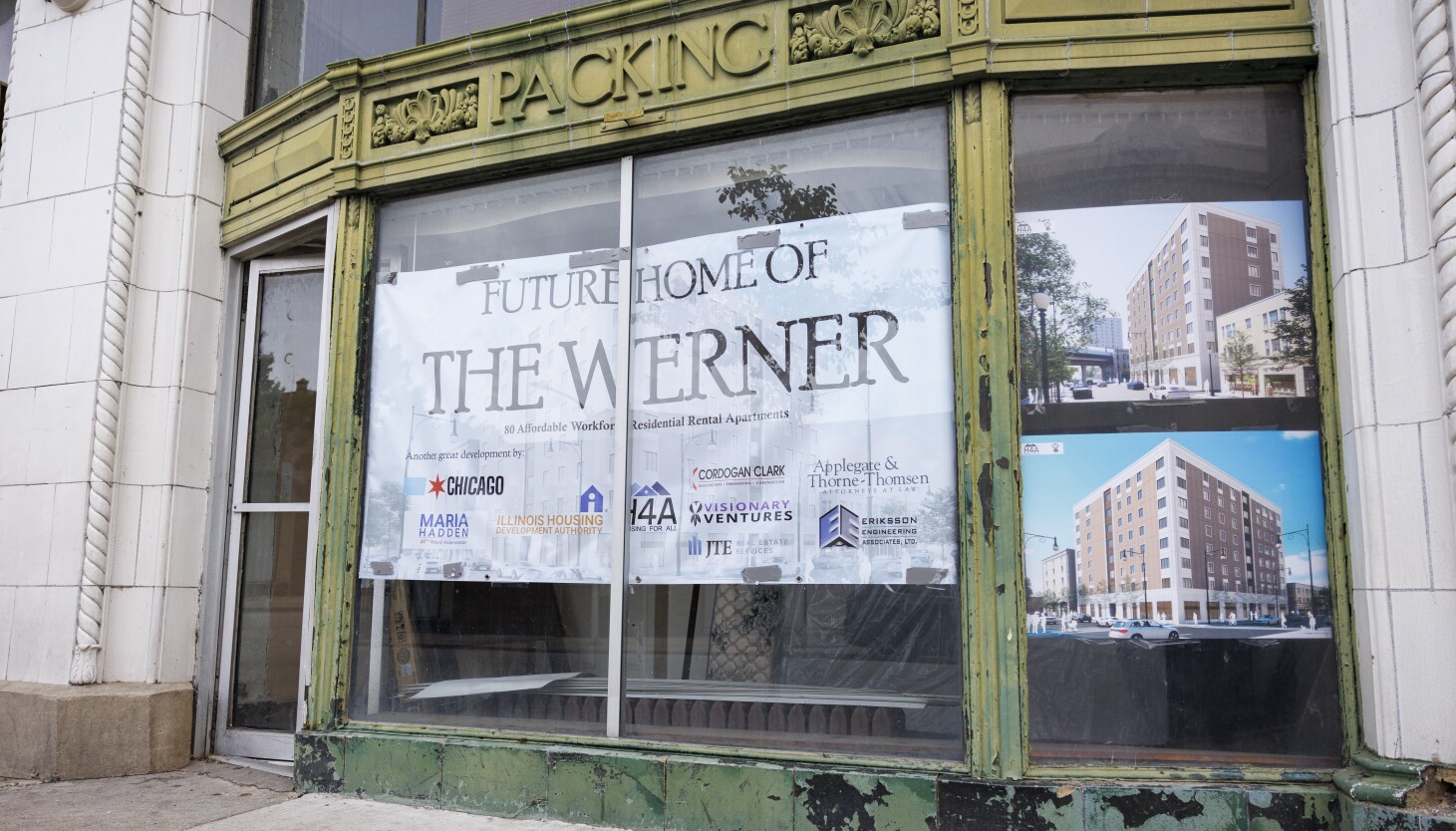
The Chicago Plan Commission approved plans Thursday to restore the historic Werner Brothers Storage Building in Rogers Park and add an eight-story mixed-use structure next door, marking the project’s first official city sign-off.
The redevelopment will create 80 affordable apartments at 7613 N. Paulina St., one block from the Red Line’s Howard station. Units will range from studios to three-bedrooms and will be priced for households earning between 30% and 80% of the area median income. The development team is marketing the project as both affordable and workforce housing because of that income spread.
Ald. Maria Hadden, who represents the 49th Ward, said the project addresses a critical shortage of affordable units without tearing down the neighborhood’s existing character. “In this area, we don’t have many opportunities to build new increased density without destroying what we have,” Hadden said. “Finding those opportunities and making an impact where we can to include more affordable housing, especially family-size units, that was a big thing.”
The project is being led by Housing For All, Visionary Ventures, and JTE Real Estate. Developers plan to demolish a one-story building adjacent to the Werner Brothers structure to clear space for the new eight-story building. The Werner itself won’t be gutted. The historic two-story lobby stays. The rest of the building converts to apartments.
Therese Thompson, vice president at architecture firm Cordogan, Clark and Associates, told the commission that the brick and terra cotta on the Werner building will be cleaned and tuck pointed as part of the work. Two pieces of heavily damaged terra cotta will be replaced. Thompson said the building’s common room will be programmed by residents after they move in.
The Werner Brothers building dates to the 1920s. It was designed by George S. Kingsley and features an intricate terra cotta facade that landed it on Preservation Chicago’s watch list. The restoration work is central to the project’s pitch to city planners: save what’s there, build up what isn’t.
The new eight-story building will include more than 5,000 square feet of ground-floor retail space. Developers told the commission they’re hoping that commercial footprint brings some economic life back to a corridor that has seen stretches of vacancy near the Howard station. The site sits within reach of CTA and PACE bus lines, as well as the Red, Purple, and Yellow line trains, a point the development team stressed to commissioners Thursday.
Amenities across the combined development will include a fitness center, bike room, and the resident-programmed common room.
The Plan Commission approval is the first in what will be a longer regulatory process before construction can begin. City Council approval is still required. The Chicago Sun-Times first reported the details of Thursday’s hearing and the commission’s vote.
Rogers Park has long been one of Chicago’s most economically and culturally diverse neighborhoods, and it has also been one of the most vulnerable to displacement pressure as rents climb across the North Side. The 49th Ward stretches from Devon Avenue up to the city’s northern border at Howard Street, covering a stretch of lakefront blocks where longtime tenants have faced rising costs and landlord turnover.
Hadden has made affordable housing a priority since taking office, and Thursday’s approval reflects years of negotiation between her office, the development team, and community groups. The 80 units won’t solve the ward’s housing gap on their own. They won’t come close.
But the project does something that’s gotten harder to find in Chicago real estate. It pairs preservation with new construction. It keeps a threatened 1920s building in use. And it does it without pushing the people who already live in the neighborhood out the door.
The development team hasn’t announced a construction start date or a projected timeline for completion. The next formal step is a full City Council vote. If that approval comes through, work on the demolition of the one-story adjacent building would follow, clearing the way for the eight-story addition to go up while restoration crews begin work on the Werner’s exterior.
The Howard corridor has been a focus of city investment for years, with transit-oriented development proposals cycling through that stretch of the Red and Yellow lines. This project, if it clears Council, would add density and retail just steps from one of the North Side’s busiest transit hubs.