
Meet the Bears' 7 Rookies From the 2026 NFL Draft
The Chicago Bears selected seven players in the 2026 NFL Draft, headlined by Oregon safety Dillon Thieneman at No. 25 overall. Here's a full breakdown.
The Chicago Bears walked out of the 2026 NFL Draft with seven new pieces and a clear statement of intent: speed on defense, depth up front, and patience with the rebuild.
General manager Ryan Poles spent three days adding players at safety, center, tight end, and beyond, with his most consequential selection coming at No. 25 overall. Poles took Oregon safety Dillon Thieneman, a 21-year-old who ran the 40-yard dash in 4.35 seconds at the NFL Scouting Combine. That number caught Poles’ attention immediately. He’s been methodical about injecting speed into a Bears defense that has lacked it, and Thieneman fits that priority directly.
Thieneman grew up outside Indianapolis and initially followed his two older brothers to Purdue before transferring to Oregon, betting on himself to climb into first-round territory. The gamble paid off. He recorded eight interceptions, 10 tackles for loss, and two forced fumbles across three collegiate seasons. He steps into the vacancy at safety alongside Coby Bryant, and according to the Chicago Sun-Times, none of the Bears’ other candidates for that spot will be a legitimate contender.
That’s the job. It’s his.
In the second round at No. 57, Poles went to Iowa for center Logan Jones, a 24-year-old who won the Rimington Trophy as the nation’s best center last season. Jones is Midwestern to his core, grew up in Iowa, stayed in state for college, and now lands in Chicago. He played 52 games at a program with a reputation for producing NFL-ready offensive linemen. NFL Network analyst Daniel Jeremiah ranked him the No. 75 overall prospect in this draft class.
Don’t expect Jones to start immediately. Poles made this pick with 2027 in mind. Veteran Garrett Bradbury holds the starting center job while Jones learns the system and cross-trains at guard. The Bears are thinking long here, not desperate.
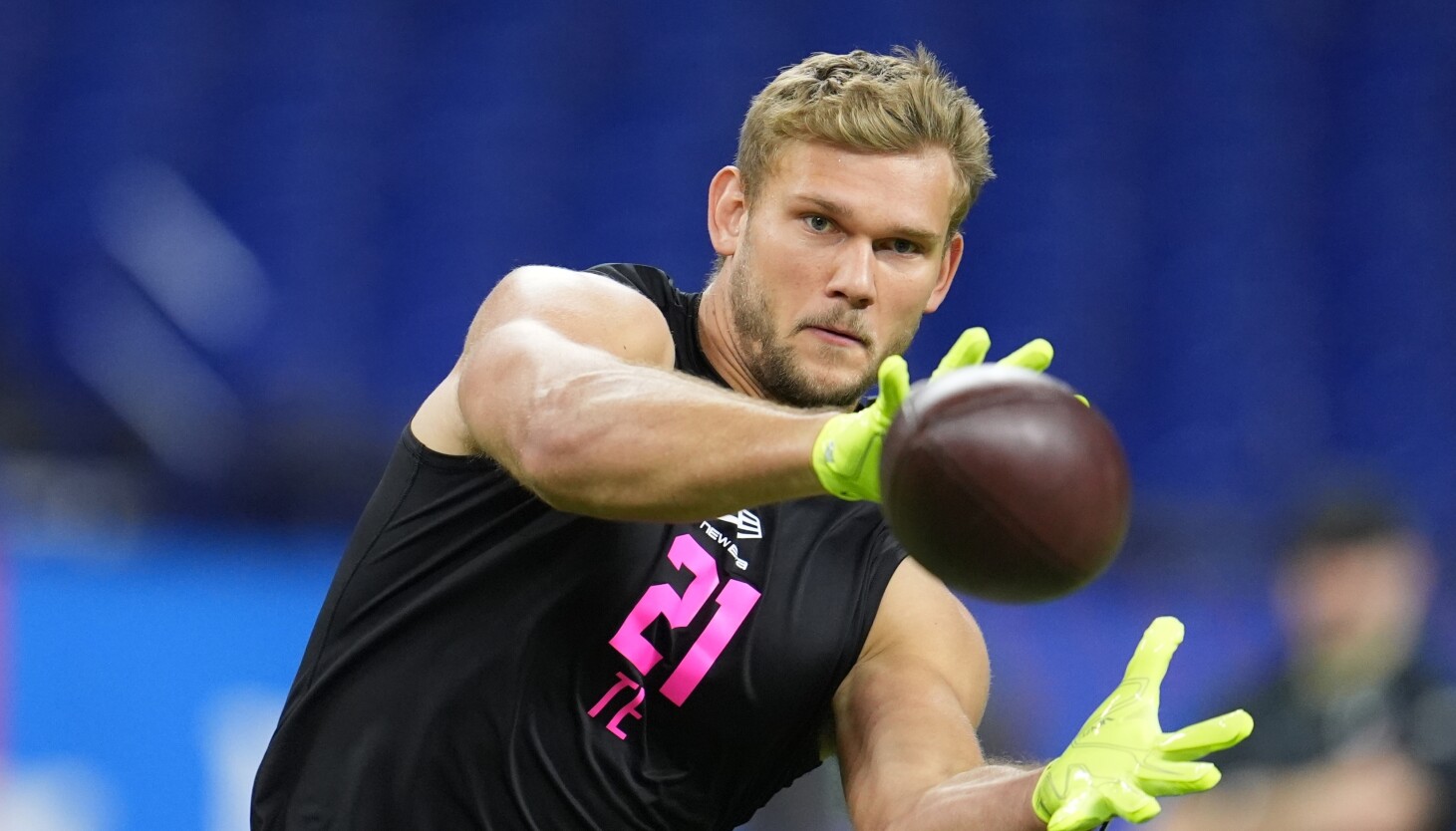
At No. 69 in the third round, Poles selected Stanford tight end Sam Roush, a 6-foot-6, 267-pound pass catcher with NFL bloodlines that run deep. Roush’s grandfather is Phil Olsen, the No. 4 overall pick in the 1970 NFL Draft. His great-uncles include Merlin Olsen, a Hall of Fame defensive tackle and actor, and Orrin Olsen. Legacy doesn’t guarantee anything in this league, but the physical tools are real.
The Bears traded back from pick No. 60 to No. 69 to land that selection, picking up additional capital from the Tennessee Titans in the process. Poles has shown throughout this draft cycle that he’s willing to move around the board to accumulate value rather than reach for names.
Four more picks followed across rounds four through seven. The Bears didn’t collect household names in those slots, but Poles has built this organization on the idea that depth and development beat splash for its own sake. He’s stocked the roster with players who fit scheme requirements rather than simply filling headline needs.
Chicago hasn’t been to the playoffs since the 2020 season, and the front office has been candid that the rebuild is ongoing. Caleb Williams finished his first NFL season in 2026 with real growing pains and some encouraging stretches, and the Bears enter this spring trying to build a competent supporting cast around him before the window genuinely opens. Thieneman addresses a defensive secondary that gave up too many big plays. Jones represents a bet on continuity at center when Bradbury’s contract situation eventually resolves. Roush gives the offense a legitimate receiving threat at tight end with the size to block at the point of attack.
The Bears spent the draft weekend making picks that won’t all appear in highlight reels by September. Poles didn’t try to force a championship roster out of this class. He addressed the safety position with a first-round talent, shored up the offensive interior with a proven Rimington Trophy winner, and added a tight end with the athleticism to contribute early in a complementary role. The remaining four picks give the coaching staff developmental options at positions where depth was thin heading into the offseason. Whether that’s enough to make a meaningful jump in the NFC North standings will depend on Williams’ continued growth and how quickly this rookie class can close the gap between potential and production.