
Millions in Bad Loans Preceded Chicago Bank's Collapse
Metropolitan Capital Bank carried $8.5 million in troubled loans before regulators seized it, including funds tied to a rabbi facing federal charges.
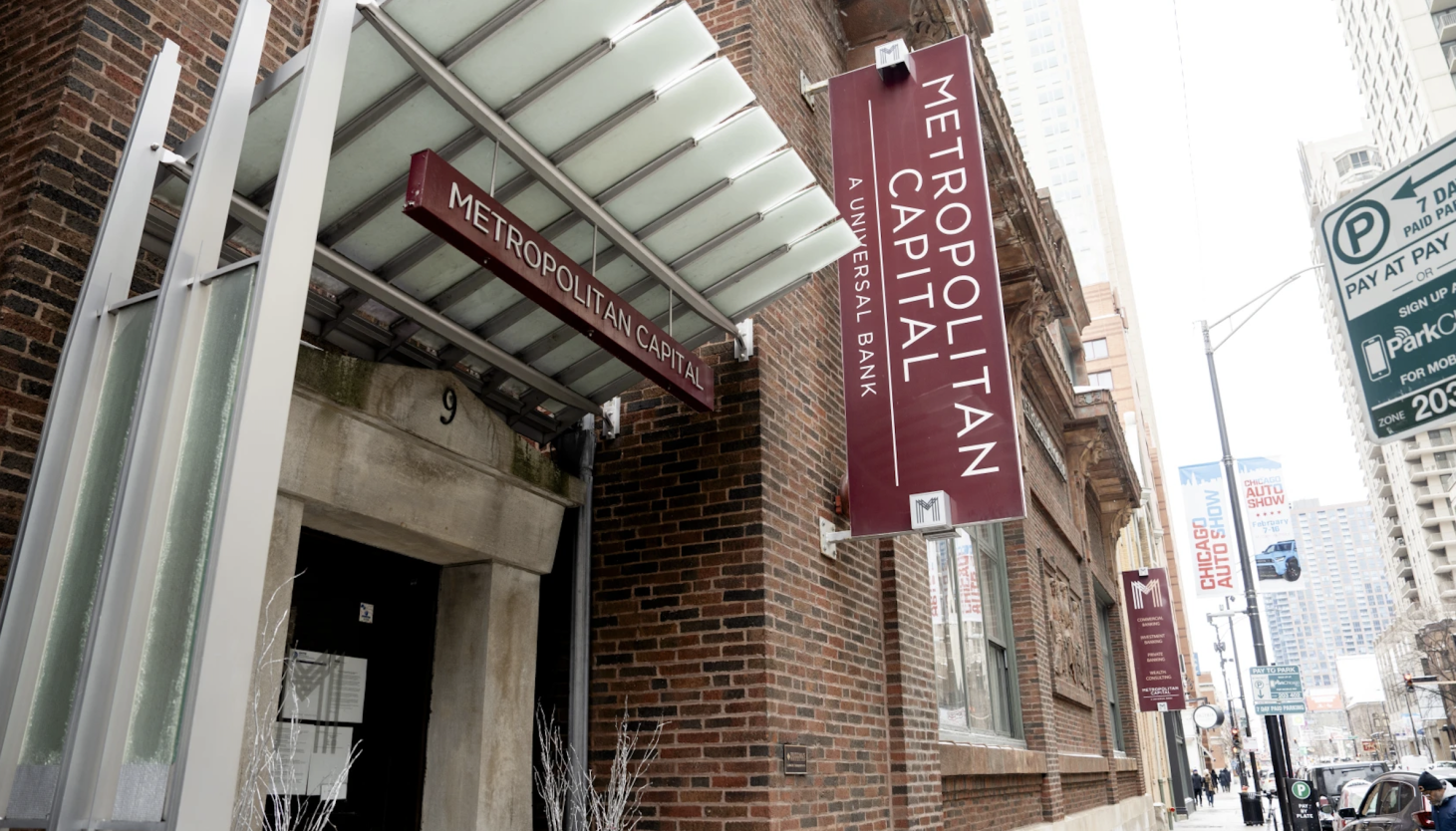
Federal regulators seized Metropolitan Capital Bank & Trust in January 2026, and court records lay out what contributed to its collapse: at least $8.5 million in loans the North Loop lender never collected, tied to a rabbi now facing federal criminal charges and a developer whose hotel project never got off the ground.
The FDIC shut the bank down citing “unsafe and unsound conditions and an impaired capital position.” That’s the standard regulatory language. What’s underneath it isn’t standard at all.
Two loans drive the bulk of the loss. One went to West Rogers Park rabbi Zvi Feiner and his wife Hinde Feiner. The other went to a developer who wanted to put a hotel where O’Briens restaurant once stood in Old Town. Neither loan came back.
Metropolitan Capital extended $4.5 million to the Feiners in 2014. The money was supposed to help finance a group of nursing homes. The arrangement fell apart, and the bank sued the Feiners in 2017, arguing they’d committed fraud by pledging nursing home revenue that was already spoken for by other creditors.
Gone. Every dollar.
A Cook County court sided with the Feiners. Metropolitan appealed and lost again in September 2020, when an Illinois appellate panel ruled that bank officials had nobody to blame but themselves. Judge Mary Mikva was pointed about it. “Metropolitan, as a sophisticated lender specializing in nontraditional loans requiring personal guarantees, should not have simply relied on Mr. Feiner’s representations regarding the status of pledged collateral,” she wrote in the court’s opinion. It’s a sentence that doesn’t leave much room for sympathy.
That ruling didn’t close the book on Feiner.
Federal prosecutors had moved against him days before Mikva’s decision came down, indicting him on separate charges. He and a colleague stood accused of “orchestrating a Ponzi scheme that raised millions of dollars from investors.” That indictment wasn’t the first time federal authorities had come after Feiner, either. The U.S. Securities and Exchange Commission filed a complaint against him in 2019, accusing him of “operating a fraudulent scheme that targeted investors in the Orthodox Jewish community in the Chicago area.” His criminal trial was set for 2026.
The Feiner loan doesn’t account for all of Metropolitan Capital’s documented exposure. The second troubled credit involved developer Sol Barket, who had designs on building a hotel at the old O’Briens site on North Wells Street in Old Town. That project never happened, and according to Chicago Sun-Times reporting, the Barket loan was part of the roughly $8.5 million in uncollected debt sitting on Metropolitan’s books when regulators shut it down.
“The bank’s exposure on these loans was significant, and we don’t expect to recover the full amount,” an FDIC spokesperson said of the failed institution’s asset review.
The FDIC now controls whatever’s left of Metropolitan Capital’s loan portfolio. The agency hasn’t disclosed the complete picture of the bank’s losses, which isn’t unusual. Regulators don’t typically walk through individual lending decisions while asset disposition is still ongoing. What they have confirmed is that the North Loop bank’s failure meets their threshold criteria: capital that couldn’t absorb the losses.
What the public record shows is a community bank that made a $4.5 million bet on a borrower who was, by his own subsequent legal history, not someone whose representations deserved much trust. The appellate court said as much in 2020. The Feiners told the bank what it needed to hear. The bank, according to Judge Mikva, didn’t look hard enough at whether any of it was true.
The O’Briens connection adds a layer of Chicago-specific texture to the story. The old restaurant site on Wells Street has been in redevelopment limbo for years. A hotel that was never built sits on top of a loan that was never repaid, connected to a bank that’s now in federal hands. That’s not a complicated story. It’s just an expensive one.
Metropolitan Capital Bank & Trust had served the North Loop market for years before the January closure. The FDIC’s tracking database now lists it among failed institutions. The agency’s ongoing review will determine what, if anything, creditors recover.