
Whole Foods Opening in Wicker Park's Former CVS Space
Whole Foods confirmed it will open a store at 1200 N. Ashland Ave. in Chicago's Wicker Park, filling a landmark building vacant since CVS closed in 2023.
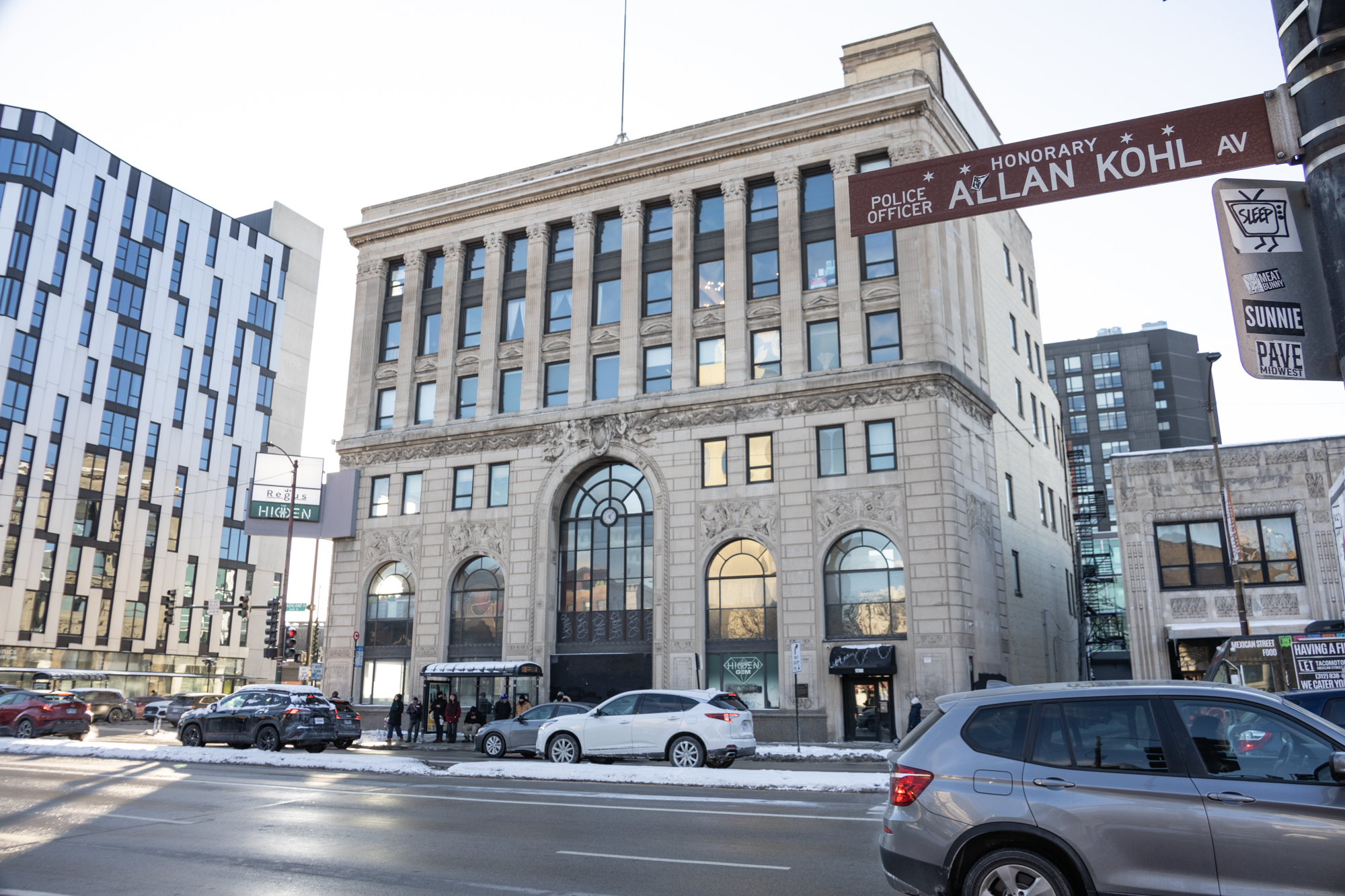
Whole Foods confirmed Friday it will open a store in Wicker Park’s landmarked Home Bank and Trust Company Building at 1200 N. Ashland Ave., filling a ground-floor space that’s been empty since CVS pulled out in early 2023.
A company spokesperson confirmed the development but declined to share additional details, including a projected opening date. Amazon, which owns Whole Foods, had not publicly acknowledged the project until last week, even as speculation spread online for months.
The building sits at the corner of Ashland Avenue and Division Street, directly across from the Polish Triangle. Completed in 1926 and designed by Karl M. Vitzthum and Co., it’s one of more than 50 banks the firm designed across the Midwest, according to a city landmarks report. CVS had occupied its ground floor until the pharmacy chain closed the location as part of a broader company-wide consolidation. The space sat vacant for three years after that, though the building retained tenants on upper floors. For a brief stretch, its basement housed a magic-themed bar called the Cauldron.
Last week, the city’s buildings department issued a renovation permit for interior demolition of “nonstructural partitions” in select areas of the basement, first and second floors. The permit, visible in online city records, is the clearest public signal yet that the project is moving.
Ald. Daniel La Spata (1st) said his office has been in contact with Whole Foods, including conversations about how to handle loading accommodations at the busy Ashland and Division corner, but he hasn’t received many specifics about the timeline or scope.
“It’s a space that’s been empty for years,” La Spata said. “There are few great uses for that much square footage, and I think anytime you can bring more jobs and bring more fresh grocery opportunities to a community, that’s a great call.”
He’s bullish on the broader trend. “2026 is the year of grocery store announcements in the 1st Ward,” he added, pointing to Trader Joe’s plans to move into another former CVS on Milwaukee Avenue in Logan Square.
The building is owned by RDM Companies, a developer that’s also planning a 13-story apartment tower on a surface parking lot behind the former CVS site. That project would add residents directly adjacent to what could become one of the neighborhood’s anchor retail draws.
The Polish Triangle area has seen storefront vacancies despite high-end development and restaurants pushing up property values nearby. A Whole Foods, with its footprint and foot traffic, could shift that dynamic in a block that has struggled to find a tenant capable of filling the old bank’s ground-floor square footage.
Not the first.
The Wicker Park corridor has become something of a proving ground for corporate chains moving into protected historic buildings. In 2024, Barnes and Noble took over the Noel State Bank building at 1601 N. Milwaukee Ave., a space previously held by Walgreens. Block Club Chicago first reported the Whole Foods confirmation after the company spokesperson acknowledged the project Friday.
The Home Bank and Trust Company Building carries its own history. Built in the heart of what was once Chicago’s “Polish downtown,” it was completed the same year as some of the city’s most significant commercial construction. Vitzthum’s firm specialized in financial institutions, and the Ashland and Division building reflects that tradition, with the kind of ornate facade that modern retail tenants have learned to work around rather than tear down.
Whether Whole Foods can make the economics work inside a century-old landmarked bank is the practical question. The grocery chain typically builds or occupies large-format suburban or urban anchor spaces designed from the ground up for high-volume food retail. Retrofitting basement, first, and second floors of a 1926 structure requires a different approach, which is likely why the initial permit covers only interior demolition of nonstructural elements.
That’s how these projects start. Structural work, refrigeration lines, and loading infrastructure come later, and each phase requires additional permitting through the city’s buildings department.
La Spata’s office will be watching the permitting process closely, particularly the loading question. Ashland at Division is a dense, transit-heavy intersection, and a grocery chain that moves significant truck volume daily needs a workable solution that doesn’t choke an already busy corner.
For now, the 1200 N. Ashland address is officially in development, and after three years of vacancy, the Polish Triangle is getting a new anchor that carries both a recognizable brand and a complicated logistical challenge to match.