
DePaul Closes Historic Reskin Theatre Amid Budget Crisis
DePaul University will shut down the landmark Merle Reskin Theatre in late May, ending nearly 120 years of theatrical life in downtown Chicago.
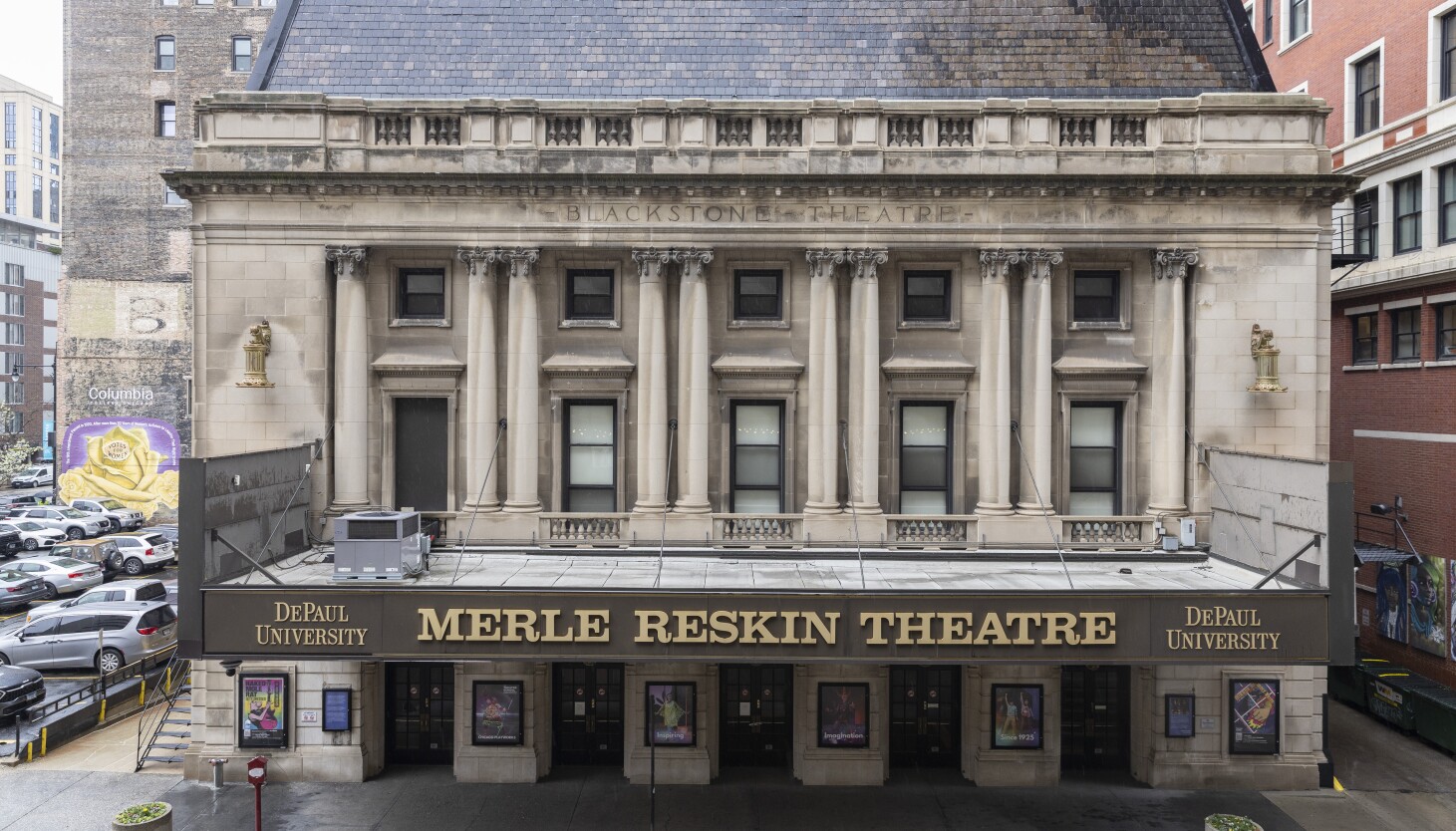
DePaul University will shut down the Merle Reskin Theatre at 60 E. Balbo Drive by the end of May 2026, cutting short nearly 120 years of continuous theatrical life inside one of downtown Chicago’s most architecturally significant buildings.
The last show standing is “Mirror of Most Value: A Ms. Marvel Play,” which opens mid-May for a two-week run. After that, the 1,400-seat Beaux Arts house goes dark. No confirmed plan exists for what happens next.
“The university is working to determine the future use of the Merle Reskin Theatre,” a DePaul spokesperson said in a statement.
That’s a thin answer for a community watching a landmarked building slip into limbo. The Reskin was designed by Benjamin H. Marshall, whose work shaped the architectural identity of early 20th-century Chicago in ways that don’t get forgotten. Marshall’s name belongs on the same list as the city’s finest builders. The Reskin is one of his best surviving structures, and right now it’s staring down an uncertain future with nobody willing to say what comes next.
DePaul’s financial situation didn’t materialize overnight. The university’s budget troubles have been compounding for more than a year, driven in part by a drop in international student enrollment that the school ties directly to the Trump administration’s immigration policies. Fewer international students means less tuition coming through the door. Less tuition means harder choices across every department. The Reskin didn’t survive those choices. It’s not a complicated equation, just a painful one.
The theatre school isn’t the only program absorbing the blow. In February, DePaul announced it would close the DePaul Art Museum at 935 W. Fullerton Ave., a decision that provoked real anger from students and faculty and the wider arts community in Lincoln Park. Two institutions, both with genuine civic value, both on the chopping block from the same cash-strapped administration. The pattern doesn’t require much interpretation.
The Reskin’s history runs deep. The building has been a working theater since the early 1900s, back when the South Loop was thick with performance venues competing for the same audiences. Most of those houses didn’t make it through the neighborhood’s long postwar decline. The Reskin did. DePaul’s Theatre School used it as both a training ground and a public-facing stage, with productions that drew audiences well beyond the student body. It’s the kind of space that’s genuinely hard to replace, not just because of the 1,400 seats or the Beaux Arts bones, but because buildings that have housed that much creative work over that many decades carry a weight that new construction can’t manufacture.
According to the Chicago Sun-Times, the university has not put forward any timeline for resolving the building’s future, which means the Reskin could sit idle for months or years while DePaul works through its finances and options.
Landmark status does provide a floor. The Commission on Chicago Landmarks can block demolition and stop exterior alterations that would compromise the building’s historic character. DePaul can’t simply sell it off to a developer who wants to gut the facade and put in 16 floors of condominiums. The protections are real. But landmark designation doesn’t compel an owner to keep a building active or open to the public. The university can lock the doors, turn off the heat, and wait. There’s no legal mechanism that forces DePaul’s hand on a timeline for 60 E. Balbo Drive.
That’s the uncomfortable reality for the 935 people who’ve passed through that building over a given season, the students who trained there, the designers and directors who built careers on that stage. The city’s landmark rules protect the shell. They don’t protect what happens inside it.
“Mirror of Most Value: A Ms. Marvel Play” runs its two-week stand in May. Then the curtain comes down on a building that has outlasted every competitor from its era. What comes after that is genuinely unknown.