
West Garfield Park Mass Shooting Kills 3 Near Barber Shop
Three people were killed and one critically injured after gunmen opened fire outside a West Garfield Park barber shop on West Maypole Avenue.
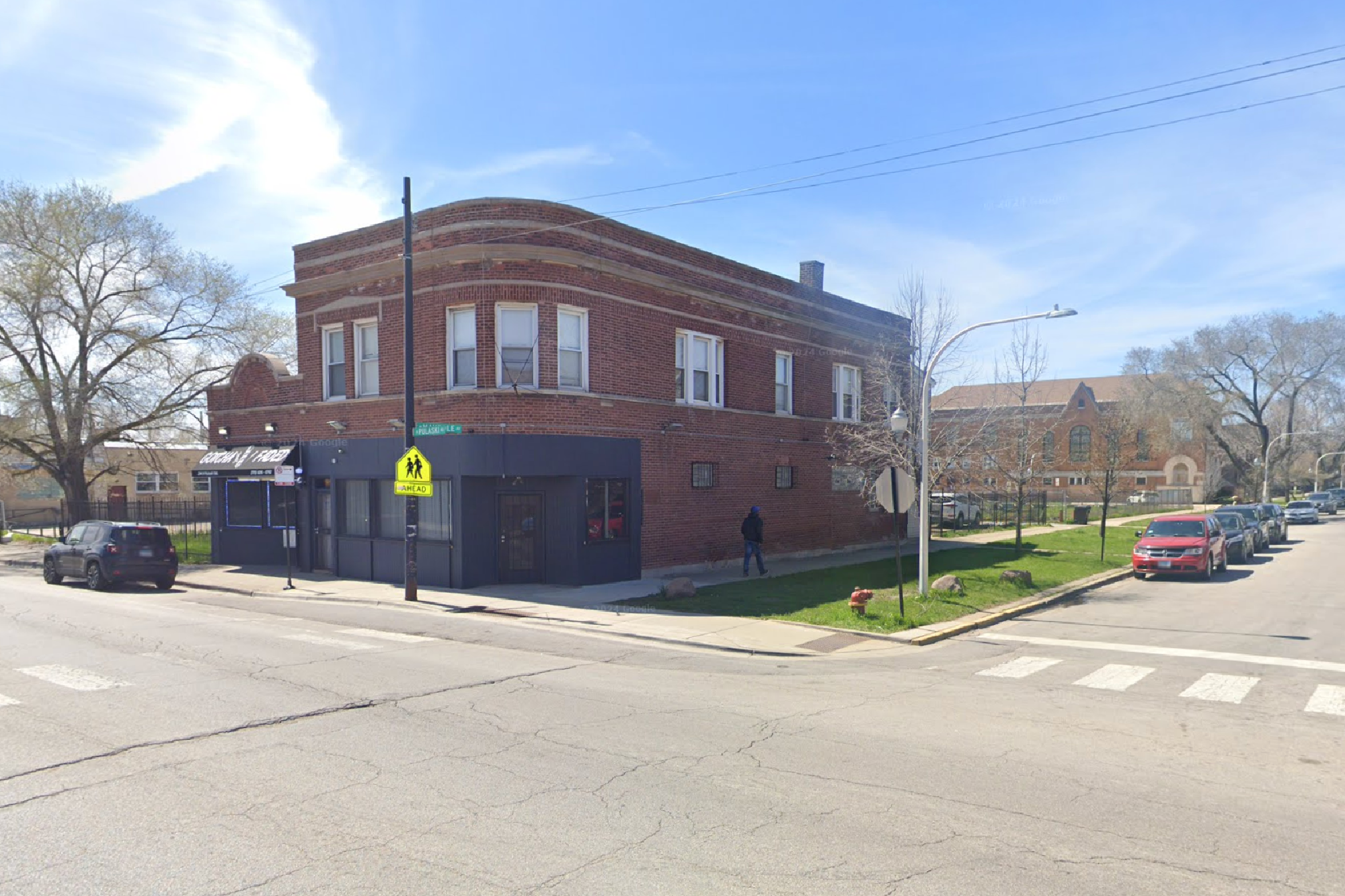
Three people are dead and a fourth man is fighting for his life after gunmen opened fire on a small group standing outside a West Garfield Park barber shop Friday afternoon, police said.
The shooting happened around 4:50 p.m. April 17 in the 4000 block of West Maypole Avenue, at the corner of Pulaski Road. A car pulled up to where three men and a woman were standing on the sidewalk. Two people got out and started shooting, according to Chicago police.
Rickia Williams, 32, was shot once in the back. She was transported to Stroger Hospital, where she was pronounced dead. Lavell Lee, 36, was shot multiple times and pronounced dead at the scene. Kenneth M. Bell Jr., 27, was also shot multiple times and taken to Mount Sinai Hospital, where he later died. A fourth victim, a man, survived but remained in critical condition, police said.
No arrests have been made.
Cook County Crime Stoppers is offering up to $10,000 for information leading to an arrest. Tips can be submitted anonymously by calling 1-800-535-7867 or online.
“This senseless act of violence has devastated families and shaken the entire community,” said Paul Rutherford, the organization’s director. “We are asking anyone who saw something or knows something, no matter how small it may seem, to come forward anonymously. Your information could be the key to bringing justice to the victims and their loved ones.”
The barber shop at Pulaski and Maypole was closed Sunday. News footage from Friday showed officers crowding the storefront as investigators worked the scene.
Greg, a West Garfield Park resident who didn’t share his last name for safety reasons, said he was a block away when the shots rang out.
“There were lots of cops,” he said. “Nobody knows what happened, but these [shooting victims] stay outside. I try to stay away from all of that.”
Greg grew up with the father of Bell Jr., Kenneth Bell Sr., and said the neighborhood has seen more violence in recent months. He didn’t know Bell Jr. well.
“When three people die, it’s a tragedy for the whole community,” Greg said. “It’s very sad, and the shootings are getting worse.”
His words carry weight in a neighborhood that has long absorbed more than its share of gun violence. West Garfield Park sits on Chicago’s West Side, where disinvestment and concentrated poverty have persisted for decades, leaving residents with fewer resources and fewer options when violence spikes.
That context doesn’t make the losses smaller.
Citywide, Chicago recorded 108 murders through April 12, a 6 percent increase over the 102 murders logged during the same period in 2025, according to police data. The West Side has accounted for a significant share of that total.
It’s a pattern that community advocates and public health researchers have tracked for years. The University of Chicago Crime Lab, which works with city agencies on violence reduction, has repeatedly found that the highest-need communities often receive the least coordinated response in the critical hours and days after a shooting.
The April 17 attack left families shattered. Williams, Lee, and Bell Jr. each had people who knew them, relied on them, showed up for them. Greg’s connection to the Bell family is a reminder that mass shootings don’t stay abstract for long in a tight neighborhood. They ripple outward fast.
As Block Club Chicago reported following the shooting, the corner of Pulaski Road and Maypole Avenue was still being processed by officers two days later, the barber shop shuttered, the block quieter than it should be on a spring Sunday.
Investigators haven’t released a description of the vehicle or the two shooters. The Chicago Police Department’s online tip portal offers another avenue for anyone with information to contact authorities without identifying themselves.
The investigation is ongoing, according to police. For residents like Greg, the waiting is its own kind of weight, familiar and exhausting, in a neighborhood that has been through this before and knows it may go through it again before anything fundamentally changes.